
Simple Strategies to Organise Your Day and Boost Productivity
In a world that moves faster than ever, one of the greatest skills you can cultivate is the ability to organize your time intentionally. Between meetings, emails, errands, and family responsibilities, our days can often feel chaotic, like a race we didn’t sign up for. The truth is, productivity doesn’t happen by accident. It’s a result of consistent habits, thoughtful planning, and the right tools.
And that’s where you can make the most of your Daily Planner to become your most powerful ally.
Whether you’re a student juggling assignments, a professional managing deadlines, or a parent trying to balance it all, using a daily planner effectively can transform how you work, think, and live. Here, you’ll discover not just why you should use a daily planner, but how to make the most of it. Simple, actionable strategies to help you stay focused, reduce stress, and achieve your goals one page at a time.
🌟Why a Daily Planner is More Than Just a Notebook
A daily planner is not just a place to jot down to-dos, it’s a personal command center for your life. It’s where your dreams meet your daily actions. The simple act of writing down your schedule can have profound mental benefits. Studies show that people who plan their days are more likely to meet deadlines, experience less anxiety, and enjoy a stronger sense of control.
Here’s why planners matter more than ever in our digital age:
Planning can help reduce feeling overwhelmed
We live in an age of constant notifications, messages, and mental clutter. Without structure, it’s easy to feel like we’re spinning our wheels. A daily planner helps you capture everything in one place; tasks, priorities, appointments. So your mind can focus on execution rather than remembering.
Writing may help improve memory and commitment
Research consistently shows that writing things by hand strengthens memory and engagement. When you physically write down your goals or to-do lists, you are more likely to remember and follow through.
A planner encourages mindful living
Planners encourage reflection, helping you live with intention rather than reactivity. Instead of reacting to whatever happens next, you start designing your day.
It creates a record of your progress
Every page of your planner becomes a small piece of your personal history, evidence of what you’ve achieved and how far you’ve come. It’s a tangible reminder that you are capable, organized, and moving forward.
Getting Started: Choosing the Right Daily Planner for You
Before you can make the most of your planner, it’s important to choose one that fits your needs and lifestyle. There’s no one-size-fits-all solution. Your planner should reflect your goals, habits, and personal style.
1. Consider Your Planning Style
Ask yourself how you naturally like to plan. Are you detail-oriented, or do you prefer a big-picture approach?
- Structured planners with pre-set sections for appointments, priorities, and notes are perfect if you love order.
- Minimalist planners with blank spaces give you creative freedom to customize layouts.
- Goal-oriented planners often include space for long-term objectives, affirmations, and gratitude reflections.
2. Size and Portability
If you’re always on the move, a compact planner that fits in your bag or briefcase is ideal. For those who prefer a desk setup, a larger planner offers more space for journaling, brainstorming, and planning out entire projects.
3. Layout Preference
Daily, weekly, and monthly layouts serve different purposes:
- Daily planners are best for people who like to structure each hour.
- Weekly planners are great for seeing the big picture and managing priorities across several days.
- Monthly spreads help you map out long-term goals and track habits.
✨ Pro Tip: Check out our daily, weekly and monthly planners for your different options to organize your time at every level.
The Art of Planning Your Day
You’ve got your planner, now how do you use it to truly enhance your productivity? The key is consistency. Here’s some practical steps to help you plan like a pro.
Step 1: Start each day with clarity
Begin your day by setting an intention. Ask yourself: What are the three most important things I want to accomplish today?
This helps you move beyond a simple to-do list. You’re not just reacting to tasks, you’re proactively shaping your day.
Use the Top Priorities section of your planner to list these must-dos. This keeps your focus sharp and ensures that even if the day gets hectic, you’ve achieved what truly matters.
Step 2: Time-Block your schedule
Time-blocking is one of the most effective techniques for productivity. It involves assigning specific time slots for specific activities, reducing the chance of multitasking and procrastination.
Here’s how:
- Morning: Allocate time for your most challenging or creative work.
- Afternoon: Schedule meetings, administrative tasks, or errands.
- Evening: Reserve time for reflection, planning tomorrow, or self-care.
By writing your blocks into your daily planner, you create accountability and protect your time from unnecessary distractions.
Step 3: Create routines
Successful people rely on routines. They eliminate decision fatigue and create stability. Use your planner to establish anchor points in your day, for example:
- Morning routines (meditation, exercise, journaling)
- Workday start-up rituals (checking email, reviewing goals)
- Evening wind-down habits (planning the next day, reading)
These rituals help you maintain consistency and mental clarity, even when life gets busy.
Step 4: Track your day, get things done
Small daily actions build big results. Most high-quality daily planners include sections such as habit tracker, to-do list, even a schedule section, to monitor behaviours like:
- Drinking water
- Reading or studying
- Exercising
- Sleeping early
- Practicing gratitude
When you visualize your consistency, you’re more likely to stay motivated. Use a daily planner to turn discipline into a game and success into a habit.
Step 5: Reflect and review
At the end of each day, take 5 – 10 minutes to reflect:
- “What went well today?”
- “What challenges did I face?”
- “What can I improve tomorrow?”
This short reflection transforms your planner into a personal growth tool. Over time, you’ll start seeing patterns; what energizes you, what drains you, and how you can optimize your performance.
Mindset Matters: Turning Your Planner into a Tool for Growth
A daily planner is not just about productivity, it’s about self-discovery. It helps you align your actions with your values and create a balanced life.
🌀 Use your planner to practice gratitude
Start or end your day by listing a few things you’re grateful for. This simple habit rewires your brain for positivity, reduces stress, and enhances motivation.
🌀 Write down affirmations
Your planner can double as a self-empowerment journal. Write affirmations that support your goals:
- “I am focused, capable, and calm.”
- “I make time for what matters most.”
- “Each day I move closer to my dreams.”
🌀 Visualize your future
Dedicate a section of your planner to your long-term vision. Sketch out where you want to be in 1 year, 5 years, or even 10 years. Seeing your dreams written out makes them feel attainable.
🌀 Celebrate small wins
Every time you check off a task, you’re reinforcing progress. Don’t underestimate the power of small victories, they build momentum for bigger achievements.
Common Planning Mistakes (and how to avoid them)
Even the best planner won’t work if you fall into common traps. Here’s what to watch out for:
1. Overloading Your To-Do List
When you write down 20 tasks for one day, you’re setting yourself up for frustration. Focus on your Top 3 Priorities, the tasks that truly move you forward.
2. Skipping Review Time
Planning isn’t just about writing, it’s about reviewing. If you never look back at your schedule, you’re missing valuable insights.
3. Forgetting to Schedule Breaks
Your brain needs rest to perform well. Block time for meals, movement, and mindfulness.
4. Treating the Planner as a Burden
Remember: your planner is there to serve you, not control you. If your schedule changes, adjust it. Don’t abandon the process.
5. Neglecting Flexibility
Life happens. Unexpected meetings, emergencies, or opportunities may arise. Build buffer time into your planner to handle the unexpected gracefully.
Advanced Planning for High Achievers
Once you’ve mastered the basics, you can level up your planning system with these advanced techniques.
1. The “MIT” Technique
MIT stands for Most Important Tasks. Each morning, identify your top 1 – 3 MITs. Complete them before anything else. This ensures you make progress on high-impact goals even on busy days.
2. The Eisenhower Matrix
Use your planner to categorize tasks by urgency and importance:
- Important & Urgent: Do these immediately.
- Important but Not Urgent: Schedule them.
- Not Important but Urgent: Delegate if possible.
- Not Important & Not Urgent: Eliminate.
By labelling tasks this way in your planner, you’ll manage time strategically instead of reactively.
3. The Pomodoro Method
Break your work into focused 25-minute sessions followed by 5-minute breaks. Many people record these intervals directly in their planner to monitor progress and maintain focus throughout the day.
4. Weekly and Monthly Reviews
Every weekend, review your accomplishments and plan for the week ahead. Every month, reflect on your goals and set intentions for the next. This keeps your life aligned with your bigger vision.
Transforming Productivity into Balance
While productivity is important, true success also includes well-being and joy. A planner can help you cultivate balance by reminding you to make time for everything that matters.
🌀 Schedule Self-Care
Write it down. Lliterally! Treat your rest and recreation like appointments you can’t miss. When you plan self-care, you honour your physical and emotional health.
🌀 Create Space for Relationships
Use your planner to note birthdays, family events, or friend catch-ups. Being intentional about connection fosters happiness and fulfilment.
🌀 Plan Personal Development
Whether it’s reading a new book, taking an online course, or learning a skill, include it in your planner. Growth is not something you “find time” for, it’s something you make time for.
🌀 Build Flex Days
Leave one day each week or month lightly scheduled. This gives you space to recharge or catch up without guilt.
Digital vs. Paper Planners: Which Is Better?
There’s an ongoing debate: Should you plan digitally or on paper? While digital tools are convenient, paper planners offer unique benefits that go beyond technology.
Paper Enhances Focus
Unlike apps that come with notifications and distractions, a physical planner gives you uninterrupted mental space.
Writing Improves Cognitive Processing
The act of handwriting engages multiple areas of the brain, helping you think more clearly and remember more effectively.
Tangibility Builds Connection
Turning the pages of your planner, checking boxes, and flipping through your completed months creates a sense of accomplishment that screens can’t replicate.
✨ (That’s why our Daily Planner combines elegant design with practical structure, so you can simply enjoy both inspiration and efficiency in one place.)
How to Stay Consistent with Your Planner
Even the most motivated person can fall off track. Consistency comes from making planning a natural part of your lifestyle.
Here’s how to stay committed:
- Keep Your Planner Visible – Leave it on your desk or nightstand as a reminder.
- Plan at the Same Time Daily – Morning for intention-setting, evening for reflection.
- Make It Enjoyable – Use coloured pens, stickers, or motivational quotes to personalize it.
- Celebrate Streaks – Reward yourself for using your planner consistently for a week or month.
- Review Regularly – Reconnect with your “why.” Remember that every minute spent planning saves hours in execution.
The Ultimate Daily Planner Routine
To make the most of your planner, follow this simple, effective routine to help get you started:
🌀 Morning (5 – 10 Minutes)
- Review your schedule.
- Write down your top 3 priorities.
- Set an affirmation or intention.
🌀 During the Day
- Check in every few hours.
- Adjust as needed.
- Mark completed tasks for a sense of progress.
🌀 Evening (5 – 10 Minutes)
- Reflect on wins and lessons.
- Prepare tomorrow’s layout.
- Write a gratitude note or journal entry.
This rhythm turns your planner into a powerful ritual that anchors your day in purpose.
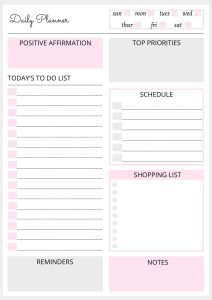
Your Future Is Written One Page at a Time
A daily planner isn’t just a productivity tool; it’s a reflection of your mindset, your goals, and your growth. It’s the bridge between where you are and where you want to be.
Every page is an opportunity to start fresh. Every line is a chance to turn intention into action. And every checkmark is proof that you are capable of building a life filled with focus, balance, and achievement.
When you plan your days intentionally, you reclaim control of your time, and in doing so, you reclaim control of your life.
✨ Start Your Transformation Today ✨
If you’re ready to elevate your focus, boost your productivity, and create meaningful structure in your life, it’s time to get your hands on the Daily Planner that does it all.
👉 Click here to purchase The Daily Planner today
Start designing the life you deserve – one intentional day at a time.
✅ Don’t Wait for Permission. BEGIN TODAY.