
Plan Ahead, Stay Balanced, and Make Every Week Count
Master your weekly planner, make every minute count and keep up in today’s fast-paced world. Between work, errands, family, and self-care, our days can blur together, then before we even realize it, the week is gone. It’s not that we lack time, it’s that we lack a plan.
That’s where a Weekly Planner becomes your secret weapon.
More than a tool for to-dos, your planner is a roadmap for success, a blueprint for balance, and a reflection of your priorities. When used effectively, it helps you manage your time, focus your energy, and live with intention.
In this guide, you’ll discover everything you need to master your weekly planner, from setting goals and prioritizing tasks to creating routines that bring clarity, not chaos.
Let’s dive into how we can turn ordinary weeks into extraordinary ones.
🌟 Why a Weekly Planner Is the Secret to a More Intentional Life
We often underestimate the power of planning. But if we think about it; every successful person, from CEOs to athletes, thrives on structure. Planning ahead doesn’t limit you; it frees you.
Here’s why using a Weekly Planner can be life-changing:
You Gain Clarity and Direction
A planner isn’t just a notebook, it’s a compass. It gives your week structure and helps you focus on what really matters instead of reacting to everything that pops up.
When you know your top priorities, you stop wasting time on distractions and start making progress toward meaningful goals.
You Reduce Stress
How often do you lie awake thinking about everything you forgot to do?
Writing it down clears your mind.
Your planner becomes your second brain, it’s your safe space to store tasks, deadlines, and dreams. When you plan your week, your stress melts into structure.
You Stay Balanced
A Weekly Planner reminds you that life is more than just work.
It encourages you to carve out time for family, fitness, rest, and joy.
Because success means nothing without balance.
You Build Consistency
When you plan regularly, you build habits that lead to long-term success. You stop chasing motivation and start relying on structure, the most sustainable form of discipline.
Simple Steps to Get You Started on Your Weekly Planning Journey
Before you can make the most of your planner, it’s important to choose one that fits your needs and lifestyle. There’s no one-size-fits-all solution. Your planner should reflect your goals, habits, and personal style.
✍️ Step 1: Start with Your Why
Before you put pen to paper, take a deep breath and ask yourself:
“What do I want this week to mean?”
That’s your foundation.
Maybe it’s progress on a project, peace in your home, or to be more present and in the moments with your loved ones.
When you start with your “why,” your planner becomes a tool for purpose, not just productivity.
💡 Pro Tip: Write your weekly intention at the top of your planner every Monday.
Examples:
- “This week, I choose focus over distraction.”
- “This week, I create balance and peace.”
- “This week, I move one step closer to my goals.”
These simple words anchor your week with meaning.
🧠 Step 2: Brain Dump Everything
Before structuring your schedule, do a brain dump. Write down everything on your mind. Work projects, errands, appointments, emails, ideas, reminders. Get it all out!
This process declutters your thoughts so you can see the big picture.
Once it’s on paper, sort your list into categories:
- Work Tasks
- Personal Tasks
- Home/Family
- Self-Care or Health
- Long-Term Goals
Now you can start organizing instead of feeling overwhelmed.
💡“You can’t organize what’s still in your head. Write it down, then take control.”
🗂️ Step 3: Set Your Weekly Goals
Your planner is your personal project manager. Each week, identify 3 – 5 main goals, not just tasks, but outcomes you want to achieve.
For example:
- Launch the new marketing campaign.
- Complete 3 workout sessions.
- Spend a tech-free evening with family.
- Read 2 chapters of a new book.
Your weekly goals should be specific, measurable, and meaningful.
💡 Bonus Tip: Write your goals at the top of your weekly planner or somewhere you can see them daily to help keep your focus sharp.
🕒 Step 4: Time-Block Your Priorities
Now that your goals are clear, it’s time to schedule them intentionally.
What is time-blocking?
It’s assigning specific time slots for specific types of work, goals or tasks. Instead of juggling 10 things at once, you dedicate focused blocks of time to one thing at a time.
Example Weekly Flow:
- Monday: Planning + Deep Work
- Tuesday: Meetings + Team Collaboration
- Wednesday: Creative Work + Social Media Content
- Thursday: Execution Day
- Friday: Review & Wrap-Up
By giving each day a theme or purpose, you reduce mental clutter and decision fatigue.
Remember: Multitasking can drain focus, while time-blocking can help channel it. Give it a go!
☀️ Step 5: Prioritize, Don’t Overload
Many people fail at planning because they try to do too much. Your weekly planner isn’t a wish list, it’s a commitment.
Each day, choose:
- 1 Major Task (your top priority)
- 2 – 3 Supporting Tasks
- 1 Wellness or personal goal
That’s it.
Overloading your list leads to burnout, not productivity.
Simplicity is sustainable.
✨“Success isn’t about doing more, it’s about doing what matters most.”
🌿 Step 6: Add Non-Negotiables
Non-negotiables are the things that keep you grounded; exercise, meditation, reading, journaling, or family time.
Write them in first.
When you plan around your values, you build a life that feels balanced, not busy.
Example:
- Monday: 30-min morning walk
- Wednesday: Date night
- Friday: Digital detox evening
- Sunday: Weekly reset and reflection
✨Your planner should reflect your whole life, not just your work life.
🧘 Step 7: Create a Sunday Planning Ritual
Sundays are sacred, not just for rest, but for reflection. Use this time to prepare your mind and planner for the week ahead.
Your Weekly Reset Checklist:
- Review last week’s wins & lessons.
- Carry forward any unfinished tasks.
- Set 3 – 5 main goals for the new week.
- Plan meals, workouts, or errands.
- Write your affirmation or mantra for the week.
🕯️ Pour a cup of tea, light a candle, and make planning something you look forward to, not a chore.
💭 Step 8: Review & Reflect Daily
Each evening, take 5 – 10 minutes to look over your planner:
- Check off completed tasks
- Adjust tomorrow’s priorities
- Reflect on what worked well
Journaling one or two lines per day helps you stay mindful of progress and gratitude.
✨“A well-planned life isn’t about perfection, it’s about intention.”
💡 Bonus Tips for Planner Mastery
Here are some extra tips to help you make your Weekly Planner a long-term success habit:
Use Colour Coding
Assign different colours to areas of life; work, personal, health, etc.
It makes your planner visually engaging and helps you spot imbalances at a glance.
Add Motivation
Include weekly quotes, affirmations, or gratitude prompts.
A little inspiration goes a long way in keeping your mindset positive.
Combine Daily & Weekly Views
Use your Weekly Planner to set direction and a Daily Planner to track execution.
This dual system ensures you stay both visionary and focused.
Include Reflection Pages
Your planner becomes more meaningful when it also captures your thoughts, not just your tasks.
Reflection transforms productivity into growth.
💬 The Power of Mindset in Planning
Even the most organized schedule won’t help if your mindset isn’t aligned.
Planning isn’t just about managing your time, it’s about managing your energy.
Think of Your Planner as a Mirror
It reflects your values, habits, and goals.
When you open it each morning, it should remind you who you’re becoming.
This helps you move beyond a simple to-do list. You’re not just reacting to tasks, you’re proactively shaping your day.
Ask yourself:
- Am I planning tasks that align with my goals?
- Am I saying yes to things that drain me?
- What would my ideal week look like, and how can I create it?
✨ When you use your planner intentionally, not only are you scheduling your time, you’re shaping your future.
🕊️ Planning for Balance, Not Burnout
We live in a “hustle” culture that glorifies being busy. But being productive isn’t the same as being fulfilled.
Your Weekly Planner helps you redefine productivity through balance:
- Rest without guilt.
- Work with purpose.
- Live with alignment.
Your planner reminds you that you are more than just your tasks, you are a human being, not a human doing.
✨ “Balance is not something you find, it’s something you plan.”
💪 Advanced Planner Techniques for High Performers
Now you’ve mastered the basics, are you ready to take it to the next level? You can level up your planning system with these advanced techniques.
Give these proven methods a try:
🌀 The 80/20 Rule (Pareto Principle)
Focus on the 20% of activities that bring 80% of results.
Use your planner to highlight your most impactful tasks each week.
🌀 Batching Similar Tasks
Group related tasks together to maintain focus.
Example: handle all emails on Tuesday afternoons, or batch creative work on Thursdays.
🌀 The Two-Minute Rule
If something takes less than two minutes, do it immediately.
Write it in your planner’s “quick tasks” section or as a “quick task”.
🌀 Time Auditing
At the end of each week, review where your time went.
Are your hours aligned with your goals? If not, adjust next week’s plan.
🌼 How to Stay Consistent with Weekly Planning
Consistency is key, so
here’s some tips to help make your planning habit stick and stay committed:
- Keep Your Planner Visible – Leave it on your desk, nightstand as a reminder, anywhere you will see it daily.
- Plan at the Same Time Every Week – Sundays are great for intention-setting, reflection and planning your week ahead.
- Make It Enjoyable – Use coloured pens, stickers, or motivational quotes to personalize it.
- Celebrate Streaks – Reward yourself for sticking to the habit and using your planner consistently for a week or month.
- Review Regularly – Reconnect with your “why.” Remember that every minute spent planning saves hours in execution.
- Don’t strive for perfection – some weeks will be messy, and that’s okay, keep going.
✨ Remember: it’s not about having a perfect planner, it’s about creating a consistent rhythm for your life.
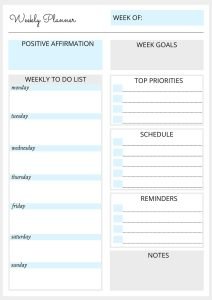
🌷 A Weekly Planner Routine Example Layout
To make the most of your planner, here’s a simple, yet effective routine layout you can try to help get you started:
Monday – Friday:
- Top 3 Priorities
- Meetings / Appointments
- To-Do List
- Self-Care Activity
- Gratitude Note
Weekend Section:
- Family or Social Activities
- House Tasks
- Reflection Questions
Weekly Reflection Prompts:
- What went well this week?
- What did I learn?
- What can I improve next week?
When you answer these questions, you evolve, week by week.
💖 Weekly Planner = Weekly Reset
Think of your planner as your weekly reset button.
It’s your moment to pause, breathe, and realign your life with your values.
When you master your Weekly Planner, you stop living on autopilot.
You start living on purpose.
✨ “Every week is a fresh opportunity to start again.”
🛍️ Ready to Master Your Week and Start Your Transformation Today 🛍️
If you’re ready to plan ahead, stay balanced, and make every week count, it’s time to invest in a planner that truly supports your goals.
👉 Get Your Weekly Planner today
✨ Start transforming your time into a life you love. ✨
✅ Don’t Wait for Permission. BEGIN TODAY.
With a clean and modern design, guided layouts, and space for goals, reflection, and gratitude, it’s more than just a planner.
It’s your personal roadmap to clarity, balance, and achievement, so make every week count…