
Big-Picture Planning for Long-Term Clarity and Success
Staying organized and focused is no longer a luxury. It’s a necessity!
Many people rely solely on daily or weekly planning, tackling one task at a time without a bird’s-eye view of the bigger-picture. While that approach can work in the short term, in a world that moves faster than ever, it often leaves you scrambling when deadlines collide, projects overlap, or unexpected opportunities arise.
This is where making use of your Monthly Planner to stay ahead all year becomes a game-changer. It gives you the ability to see your life in full scope, anticipate challenges, celebrate milestones, and ensure that every day aligns with your long-term goals.
Being a busy professional, student, entrepreneur, a parent, or someone striving to balance personal growth and life’s responsibilities, mastering the use of a Monthly Planner can completely transform how you approach your year.
In this post, we’ll dive deep into how to use a Monthly Planner effectively, from setting long-term goals to creating actionable monthly, weekly, and daily steps, and ending with strategies to make planning habits stick.
🌟 Why a Monthly Planner Is Essential for the Long-Term
Daily and weekly planners focus on immediate tasks, which is useful for staying on top of obligations. However, without a monthly perspective, it’s easy to miss the bigger picture.
A Monthly Planner can provide:
Long-Term Clarity
A monthly layout helps you see how small steps contribute to your larger goals. Whether you’re planning a project, career milestone, or personal challenge, knowing what each month holds gives you a roadmap for success.
Prioritized Focus
It’s easy to get caught up in urgent tasks that seem important but do little for your long-term goals. A Monthly Planner lets you prioritize what matters most, so your time and energy are invested wisely.
Better Time Management
A monthly overview allows you to distribute tasks evenly, avoid overloading any single week, and strategically plan for busy periods. It’s the key to work-life balance and stress reduction.
Track Progress & Celebrate Wins
Checking off completed projects or milestones monthly reinforces motivation. Reflection at the end of each month shows growth and areas to improve, keeping you accountable and inspired.
Simple Steps to Get You Started on Your Monthly Planning Journey
Before you can make the most of your monthly planner, it’s important to choose one that reflects your needs, lifestyle, habits and those long-term goals ahead.
✍️ Step 1: Start with Big-Picture Goals
Before writing dates or tasks in your Monthly Planner, take a step back, and ask yourself:
“What do I want to achieve this year?”
Break your annual goals into key areas of life, such as:
- Career & Professional Growth
- Personal Development & Learning
- Health & Fitness
- Relationships & Social Life
- Finances & Budgeting
- Travel & Adventure
- Hobbies & Creativity
Once you have your categories, determine 3 – 5 major goals per area for the year. These goals will guide how you allocate time each month.
💡 Tip: Write these annual goals on a separate section of your planner or a vision board. Refer to them monthly to keep priorities aligned.
🗂️ Step 2: Break Goals Into Monthly Milestones
Now that you know your yearly goals, break them into monthly milestones. Think of each month as a chapter in your story.
Example:
Annual Goal: Launch an online course by December.
Monthly Milestones:
- January: Research course topic
- February: Outline curriculum
- March: Record videos
- April: Create marketing materials
- May: Pre-launch promotion
- June: Launch course
Breaking down goals this way turns intimidating objectives into achievable steps, keeping you motivated throughout the year.
🕒 Step 3: Plan Each Month Strategically
With milestones in place, it’s time to fill your Monthly Planner. Here’s how:
1. Mark Important Dates
Include:
- Birthdays and anniversaries
- Work deadlines
- Appointments and events
- Travel plans
Having these dates visible prevents overbooking and ensures you allocate enough time for personal and professional responsibilities.
2. Allocate Key Projects
Decide which major projects or goals you will focus on this month. Assign them specific weeks so you’re not juggling multiple priorities at once.
3. Time for Reflection
Dedicate a small section at the end of each month for review and reflection. Ask yourself:
- “What did I achieve this month?”
- “What challenges did I face?”
- “What lessons can I apply next month?”
Reflection strengthens clarity and motivation.
🧠 Step 4: Use Monthly Themes
Many successful planners use monthly themes to guide focus. Themes keep you motivated and provide context for your actions.
Example Themes:
- January: Health & Fitness Reset
- February: Focus on Relationships
- March: Career Growth & Skills
- April: Creative Projects
- May: Financial Planning & Budgeting
Each theme gives your month a sense of purpose and allows you to focus energy in alignment with your goals.
📆 Step 5: Integrate Weekly Planning
Once your monthly overview is complete, integrate it with weekly planning.
- Review your monthly tasks and assign them to specific weeks.
- Determine top priorities for each week to avoid last-minute stress.
- Add buffer time for unexpected events or delays.
This hierarchical approach — year → month → week → day — ensures that your daily actions consistently align with long-term goals.
✨ Step 6: Daily Action Items
With your monthly and weekly plans in place, break them down into daily action items.
Tips for daily planning:
- Focus on 3 main tasks per day
- Schedule appointments or tasks in time blocks
- Include one activity for personal growth or self-care
- End each day by reviewing accomplishments and planning for tomorrow
This approach keeps momentum while preventing burnout.
🌿 Step 7: Use Planner Features Effectively
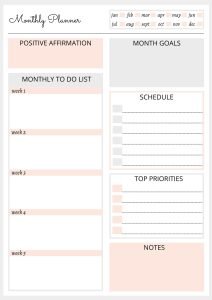
A quality Monthly Planner has features or sections designed to make planning seamless. Here’s how to use them:
- Monthly Calendar Grid: Mark key dates, milestones, and deadlines.
- Notes Section: Record reflections, ideas, or lessons learned.
- Habit Tracker: Monitor habits like exercise, reading, or meditation.
- Goal Tracker: Keep your long-term objectives visible and updated.
- Inspirational Quotes: Boost motivation with positive affirmations.
💡 Pro Tip: Use colours or stickers to visually differentiate between categories like work, health, and personal goals.
💡 Step 8: Plan for Flexibility
Life rarely goes exactly as planned. A good Monthly Planner allows for adaptability.
- Move tasks that weren’t completed to the next week
- Adjust deadlines if necessary
- Stay focused on long-term goals rather than rigid adherence
Flexibility reduces stress and encourages a positive planning habit.
🧘 Step 9: Review and Reflect Each Month
At the end of every month, take 15 – 30 minutes to reflect:
- “What worked well?”
- “What didn’t go as planned?”
- “Did you progress toward your annual goals?”
- “Which habits should you adjust?”
Reflection is where growth happens. It ensures that every month builds toward a successful year.
📈 Step 10: Celebrate Your Wins
Don’t wait until December to celebrate progress. Monthly planning allows you to acknowledge achievements monthly, boosting motivation and reinforcing success habits.
Celebrate:
- Completed projects
- Habits maintained
- Personal milestones
- Small daily victories
A planner isn’t just a tool, it’s a record of progress.
🛠️ Tips for Making Monthly Planning a Habit
Consistency is key, so here’s some strategies to help make your monthly planning a habit and stick:
- Schedule a Monthly Planning Session – Set aside the first weekend of each month to update your planner.
- Keep Your Planner Visible – Place it where you’ll see it daily.
- Combine with Morning or Evening Routines – Review monthly goals alongside daily tasks.
- Use Motivational Tools – Highlight tasks, use stickers, or add inspirational quotes.
- Adjust, Don’t Abandon – If a plan isn’t working, tweak it for next month rather than giving up.
🌞 A Monthly Planning Mindset
A planner is more than a schedule, it’s a mindset. It teaches you:
- Prioritization
- Consistency
- Reflection
- Balance
With a monthly perspective, you no longer react to life; you design it.
✨ “Your future is planned one month at a time. Take control, stay ahead, and make each month count.”
🛍️ Ready to Transform Your Year? 🛍️
Take control of your time, stay ahead of deadlines, and achieve your long-term goals with the Monthly Planner.
👉 Get Your Monthly Planner today
✨ Start transforming your time into a life you love. ✨
✅ Don’t Wait for Permission. BEGIN TODAY.
With a clean and modern layout, designed for clarity, growth, and success, it helps you plan months, focus on priorities, and reflect on progress, so you can create a year full of achievements, balance, and joy.